
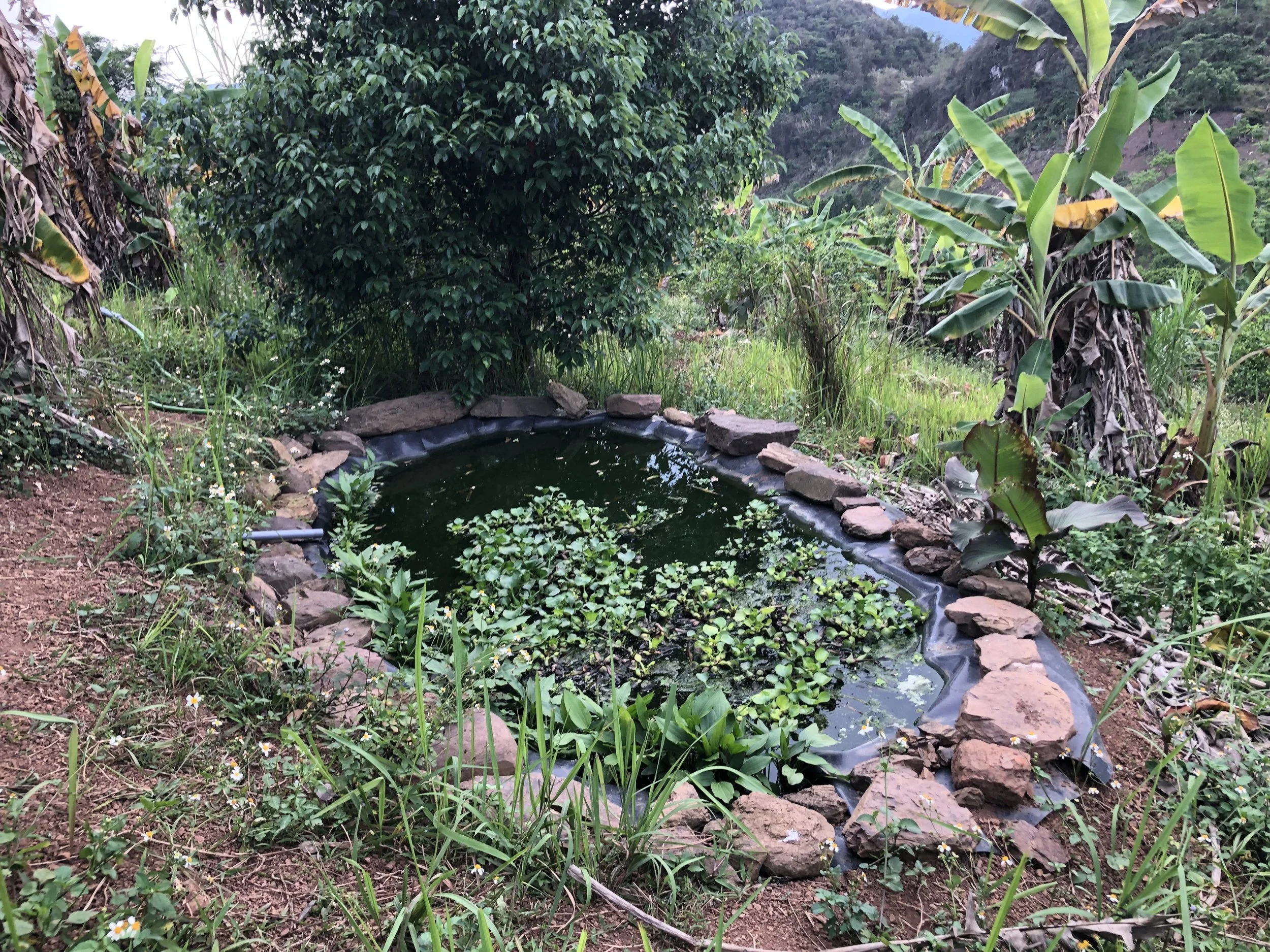
Phytoremediation of grey water in a constructed wetland
Objective: Designed and implemented a closed-loop, low-maintenance wastewater treatment and nutrient-recycling system on a rural homestead to mitigate water scarcity, eliminate chemical run-off, and safely irrigate an orchard.
Challenges: The primary challenges included managing household wastewater safely without complex mechanical infrastructure, preventing grease and pathogen contamination in soil, and eliminating persistent synthetic chemicals that could disrupt the biology of an integrated food forest.
Technical Solutions & Implementation
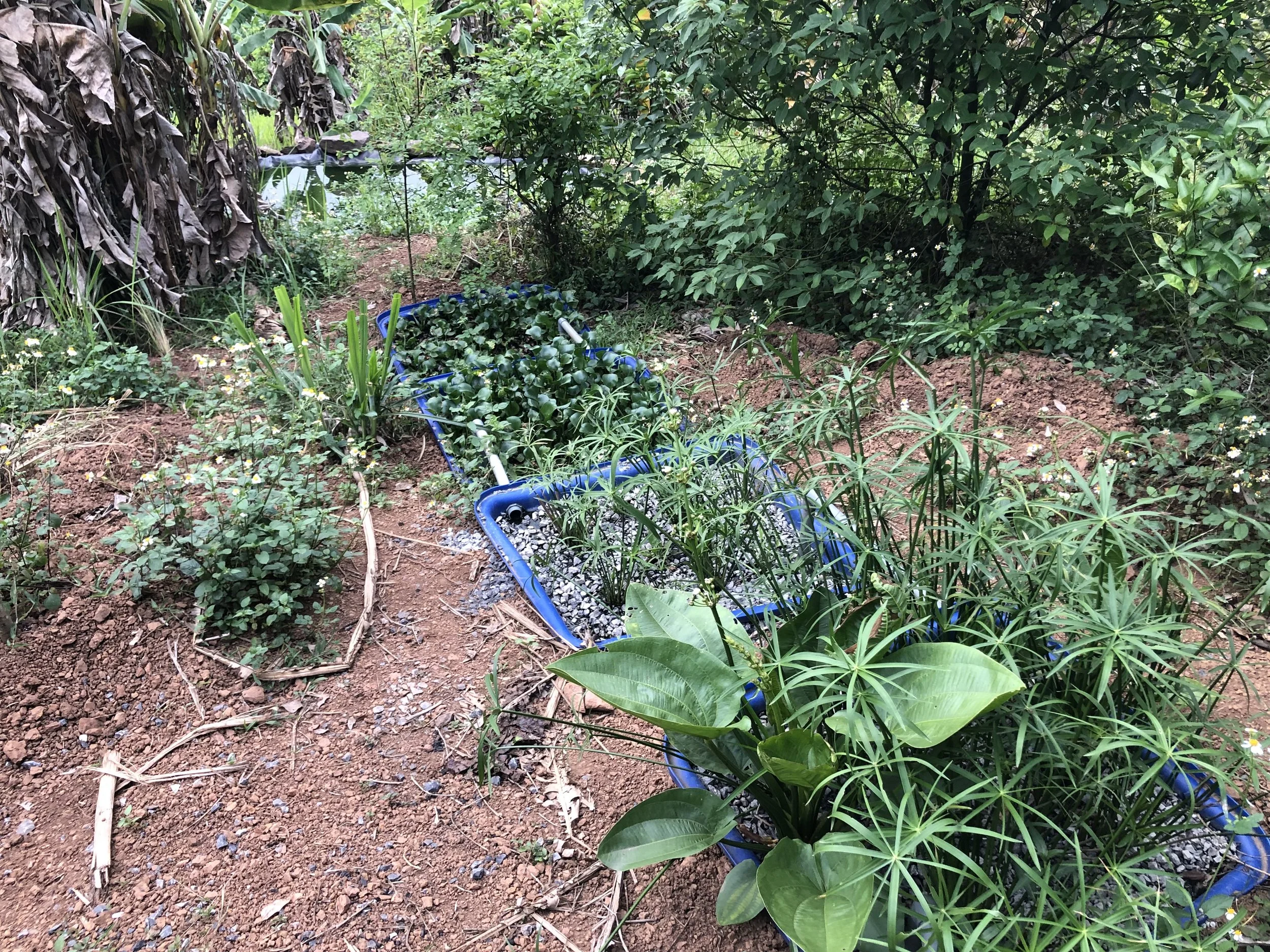
Source Separation & Pre-treatment: Diverted blackwater through a septic tank followed by a 150L activated charcoal drum for odor neutralization. Installed a custom 18L grease trap using a T-joint configuration to capture and compost kitchen grease.
Chemical Input Control: Replaced commercial cleaning agents with biodegradable homemade potassium hydroxide (KOH) soap to ensure complete compatibility with soil microbes.
Constructed Wetland (Phytoremediation): Engineered a multi-stage filtration system consisting of four 200L HDPE barrels configured for a 4-day minimum retention time. Utilized gravel-planted umbrella palms and canna lilies, followed by free-floating water hyacinth, to absorb excess nitrogen and break down organic loads through root-zone biology.
Passive Keyline Irrigation: Routed filtered effluent into a 1.2m deep polishing pond linked to a 2% sloping keyline trench network, passively delivering nutrient-rich water directly to fruit trees (oranges and macadamias) without soil erosion.

